An aging or damaged garage floor can affect more than the appearance of a home. Cracked concrete, stubborn stains, surface deterioration, and accumulated dust can make the space harder to maintain and less functional. Planning an Arizona garage floor renovation requires careful consideration of local weather conditions, concrete quality, surface preparation, and the flooring system best suited to the property’s needs. Superior Garage Flooring helps homeowners understand the importance of selecting appropriate flooring solutions that combine durability, appearance, and practical performance.
Arizona’s climate presents specific considerations for residential garage flooring. High temperatures, intense sunlight, dust, and seasonal weather changes can influence how concrete surfaces perform and how coating materials should be installed. Understanding these factors can help homeowners make informed decisions before starting a renovation project.
Understanding the Challenges of Arizona Garage Floors
Concrete is a common garage flooring material because it provides a strong foundation for vehicles, storage, and everyday household activities. However, untreated concrete is not completely resistant to wear. Over time, repeated vehicle traffic, temperature changes, moisture exposure, and chemical spills can contribute to surface deterioration.
Arizona homeowners may encounter several common flooring concerns:
- Surface cracking: Temperature fluctuations, soil movement, and underlying concrete conditions can contribute to cracks.
- Dust accumulation: Unsealed concrete can produce fine dust as its surface gradually wears.
- Oil and chemical stains: Automotive fluids, cleaning products, and other substances can leave persistent marks.
- Surface deterioration: Repeated traffic and abrasion can gradually affect the concrete’s appearance and condition.
- Moisture-related problems: Water entering through vehicles, cleaning activities, or seasonal rainfall can affect certain flooring systems.
Identifying these problems before renovation is important. A coating applied over unstable, contaminated, or poorly prepared concrete may not perform as intended.
Arizona Garage Floor Renovation Starts With Proper Assessment
Before selecting a coating or decorative finish, homeowners should understand the existing condition of their garage floor. A professional assessment helps identify problems that may affect material selection, preparation requirements, and installation procedures.
Several factors deserve attention during the initial inspection.
Concrete condition: Existing cracks, spalling, uneven areas, and damaged sections should be evaluated. Minor surface imperfections may require patching, while more extensive deterioration could involve additional concrete repairs.
Moisture levels: Moisture testing can help determine whether water vapor is moving through the concrete. Excessive moisture can interfere with coating adhesion and contribute to premature flooring problems.
Previous treatments: Existing sealers, paints, adhesives, and coatings may prevent new materials from bonding properly. Their condition and compatibility should be assessed before installation.
Intended garage use: A garage used primarily for parking has different requirements from one that functions as a workshop, storage area, or multipurpose living space. Vehicle traffic, equipment movement, and potential chemical exposure should influence the flooring selection.
A detailed assessment provides a practical starting point and reduces the likelihood of overlooking problems that could affect the finished surface.
Choosing the Right Garage Floor Coating for Arizona Homes
Different coating systems offer different characteristics. Homeowners should compare their performance requirements, installation conditions, maintenance needs, and appearance before making a decision.
Epoxy Garage Floor Coatings
Epoxy is a popular option for residential garages because it creates a hard, protective surface over properly prepared concrete. It can help resist abrasion, stains, and everyday wear while providing a smooth, finished appearance.
Decorative flakes and different color options also allow homeowners to customize the floor. However, epoxy products vary in formulation, and installation conditions can influence their performance. Proper surface preparation and adherence to manufacturer specifications are essential.
Polyaspartic Floor Coatings
Polyaspartic coatings are commonly selected for residential garage flooring projects because of their relatively fast curing times and resistance to abrasion and chemical exposure. Certain formulations also offer good UV stability, which can be beneficial in areas exposed to sunlight.
Their faster curing characteristics require careful installation planning. Temperature, humidity, application thickness, and the manufacturer’s recommended procedures must be considered to achieve the intended results.
Polyurethane Topcoats
Polyurethane coatings are frequently used as protective topcoats within multi-layer flooring systems. Depending on the formulation, they can provide additional resistance to abrasion, chemicals, and sunlight.
They may also help protect decorative finishes from everyday wear. Compatibility between the primer, basecoat, and topcoat is important when designing a complete flooring system.
Rather than choosing a product based on appearance or curing speed alone, homeowners should consider how the complete coating system will perform under their garage’s actual conditions.
Why Surface Preparation Matters for Long-Term Performance
Even high-quality coating materials can experience premature problems when applied to an improperly prepared concrete floor. Surface preparation is one of the most important stages of a garage renovation because it creates the foundation for proper coating adhesion.
Professional preparation commonly involves several steps:
- Remove existing contaminants: Oil, grease, dirt, loose paint, and other substances must be removed because they can interfere with adhesion.
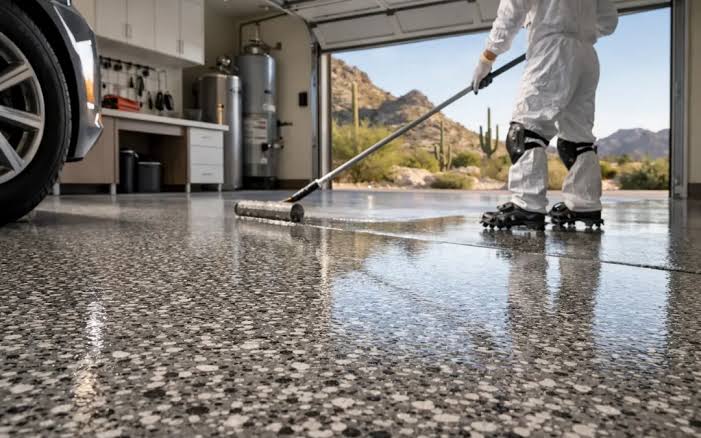
- Grind the concrete: Mechanical diamond grinding removes weak surface material and creates the appropriate concrete profile for the selected coating.
- Repair damaged areas: Suitable repair materials are used to address cracks, pits, and other imperfections according to the condition of the slab.
- Clean the surface: Dust and remaining debris must be thoroughly removed before coating application.
- Check environmental conditions: Concrete temperature, ambient temperature, humidity, and moisture conditions should meet the product manufacturer’s requirements.
Skipping these steps can increase the risk of peeling, bubbling, uneven finishes, and other coating failures. A properly prepared substrate helps create a more reliable foundation for the flooring system.
How Arizona’s Climate Influences Garage Floor Installation
Local weather conditions should be considered when scheduling and planning a garage flooring project. Arizona experiences substantial heat, particularly during summer, and these conditions can affect coating application and curing.
High temperatures may shorten working times for certain products, making application more difficult if the installation team does not account for environmental conditions. Concrete temperature can also differ from the surrounding air temperature, so checking the slab itself is important.
Sunlight exposure is another consideration. Garages with open doors or areas exposed to direct sunlight may benefit from coating systems with suitable UV resistance. This can help reduce concerns such as discoloration or surface deterioration associated with unsuitable materials.
Seasonal rainfall also deserves attention. Water entering the garage can create temporary moisture exposure, while moisture moving through the concrete may affect coating adhesion. These are separate issues and should be evaluated appropriately.
For reliable results, installers should follow product-specific guidelines rather than relying on general assumptions about Arizona’s weather. Proper scheduling and environmental monitoring help ensure that materials are applied under suitable conditions.
Designing a Garage Floor That Is Practical and Attractive
A garage floor renovation can improve the appearance of the space while addressing everyday maintenance requirements. However, decorative choices should complement the flooring system’s intended function.
Color flakes are a common decorative option because they introduce texture and visual variation. They can also help make minor dirt and dust less noticeable between cleanings. Homeowners can choose different color combinations to coordinate with garage cabinets, wall finishes, and the overall property design.
The finish texture also deserves consideration. A surface should provide an appropriate balance between cleanability and traction. Slip resistance depends on the coating formulation, texture, and any added anti-slip materials. Homeowners should discuss these options with their installer, particularly if water regularly enters the garage.
Other design considerations include:
- Choosing colors that complement existing interior finishes.
- Selecting a suitable texture for the garage’s intended activities.
- Considering decorative flakes for a more consistent appearance.
- Discussing appropriate topcoats for the expected level of traffic.
- Planning transitions around garage entrances and adjoining surfaces.
A thoughtful design helps ensure that the renovated floor serves practical needs without overlooking appearance.
Maintaining a Newly Renovated Garage Floor
Proper maintenance helps preserve the appearance and performance of a garage flooring system. Although coated concrete is generally easier to clean than untreated concrete, it still requires routine care.
Homeowners should sweep or dust-mop regularly to remove loose dirt, sand, and other abrasive particles. These materials can contribute to surface wear when repeatedly dragged across the floor by vehicles or equipment.
For routine cleaning, use a mild cleaning solution recommended by the coating manufacturer. Avoid harsh chemicals, abrasive cleaning tools, or products that could damage the finish. Automotive fluid spills should also be cleaned promptly using appropriate procedures.
Additional maintenance practices include:
- Use suitable mats beneath vehicles that regularly leak fluids.
- Avoid dragging heavy or sharp equipment across the surface.
- Follow manufacturer recommendations for cleaning products.
- Inspect the floor periodically for cracks, chips, or unusual changes.
- Address localized damage before it develops into a larger problem.
Following these practices can help maintain the flooring system and reduce unnecessary wear.
Make Informed Decisions About Your Arizona Garage Floor Renovation
A successful garage flooring project involves more than choosing an attractive coating. Concrete assessment, moisture evaluation, material compatibility, surface preparation, and climate-appropriate installation all contribute to the final result.
For a reliable Arizona garage floor renovation, homeowners should compare flooring systems based on their garage’s condition, intended use, maintenance expectations, and environmental requirements. Asking installers about preparation methods, product specifications, curing conditions, and warranty coverage can also provide valuable information before committing to a project.
With guidance from Superior Garage Flooring, homeowners can make informed decisions about suitable materials and installation practices. Careful planning and attention to long-term performance can result in a cleaner, more functional, and more attractive garage floor.